Press
Featured coverage
External news and institutional coverage featuring CAiSEY.

“To get real, personalized pushback on exactly what I said was a light bulb: oh, I hadn’t considered it that way. CAiSEY pushes back, pokes holes, brings up viewpoints I hadn’t considered, so students walk into class thinking far more comprehensively about the case. What was one-way has become two-way.”

“Columbia Business School has developed a voice-prompted “discussion agent” to pose questions about case studies and other topics in advance of class that’s now used in courses at 25 other B-schools, including those at the University of Virginia and at the University of California at Berkeley.”

“The risk with AI is the same: that the thing expanding our capacity to produce writing constrains our ability to put thought behind it. A world of more, but emptier, words. Software built to attack this problem—to work the way a speechwriter does—is, slowly, starting to appear. Dan Wang, a former professor of mine at Columbia Business School, watched ChatGPT hand his students easy answers and built a program that debates with them instead.”

Coverage of how schools can use AI to strengthen learning without outsourcing critical thinking, including CAiSEY's voice conversations for business case preparation.

“After a CAiSEY conversation, students come to class more committed, more confident, and more connected.”

“Jill Cohen, one of Caisey’s co-founders and a former Columbia Business School student, spoke on a panel in one of Wang’s classes last year. Multiple students came up afterward to tell her they love the app and have had so much fun with it, she said; that was mind-blowing. ‘I don’t ever remember loving homework,’ Cohen said. ‘What kid says they love homework?’”
“Students get pushback, and it is a really rich tool for discussion. It has had rave reviews.”
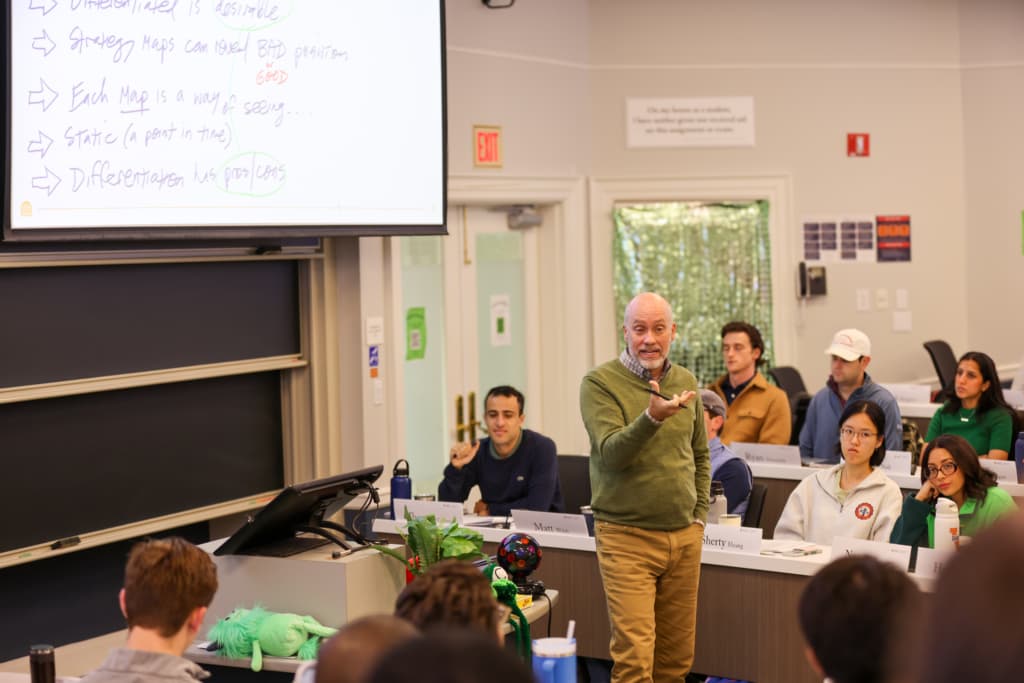
“CAiSEY is configured to have realistic, voice-based conversations with students about the course material, including interactions that [UVA Darden Professor Jared] Harris describes as “polite but adversarial,” meaning it is designed to challenge assumptions and analysis voiced by the student.”
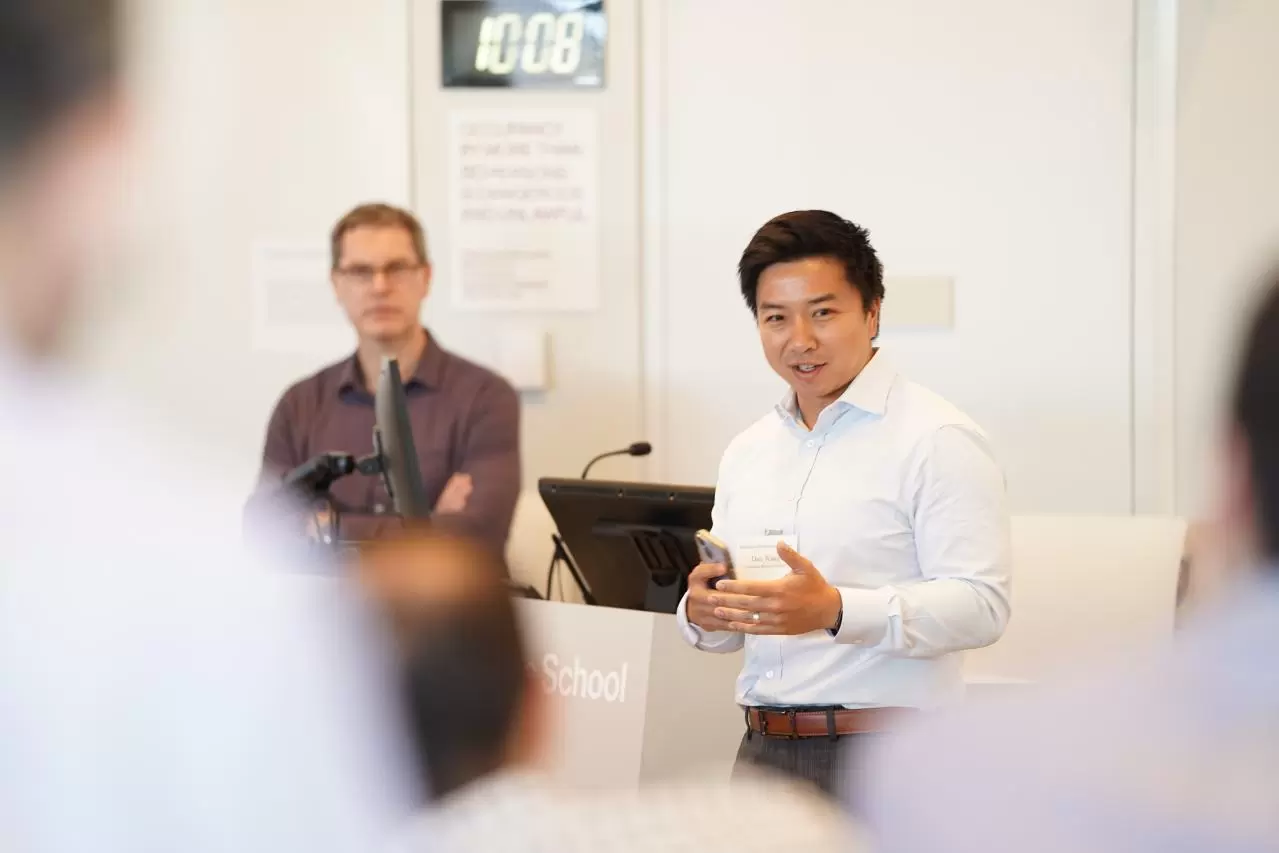
“When a person has a conversation with an AI partner by voice, that's a personalized discussion—that's really different from having a conversation with 50, 60, or 70 other people.”
Video and audio
Clips and interviews

On the Edtech Insiders podcast, Dan Wang and Johanna Chouraqui discuss why voice conversations can build deeper critical thinking than text, how CAiSEY acts as a thinking partner rather than a homework shortcut, and what voice discussions reveal to instructors about student understanding.
Part of Columbia Business School's MBA Transformed deep-dive on generative AI and the case method, this clip explains how CAiSEY uses voice-first AI discussion to make case preparation more active, conversational, and demanding before students enter the classroom.

Soon's video examines how universities are responding to student AI use with more AI, including detection tools. The linked timestamp highlights CAiSEY as a different approach: giving students a structured voice conversation that asks them to reason through and defend their thinking.

CBC Radio's As It Happens frames the segment around a Columbia Business School professor who responded to students' AI use by building a chatbot to help them learn. The episode places CAiSEY in a broader news-magazine format alongside the day's other stories.